Counting.
Connect number words with objects, organized groups, and the total in a collection.
A counting task brings together a sequence of number words, one count for each object, and a statement of the total. Loose materials let you slow down and inspect each part of that process.
Move counters from an uncounted area into a counted area, or connect cubes as each one is counted. Change the arrangement without changing the collection and ask whether the total has changed.
Once a learner can count a collection, invite them to organize it. Pairs, fives, and tens create opportunities to explain a total using groups. Keep the collection small enough that the learner can check the explanation themselves.
Make it concrete.
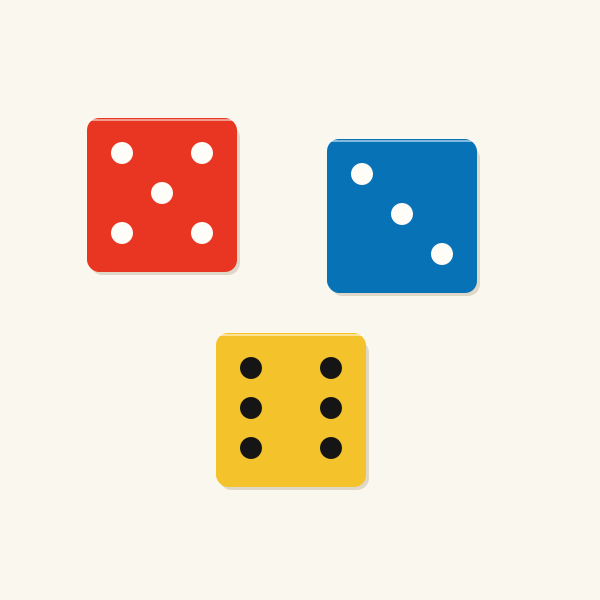
Dice
Objects with numbered or dotted faces for generating values, playing number games, and collecting chance data.
 Explore
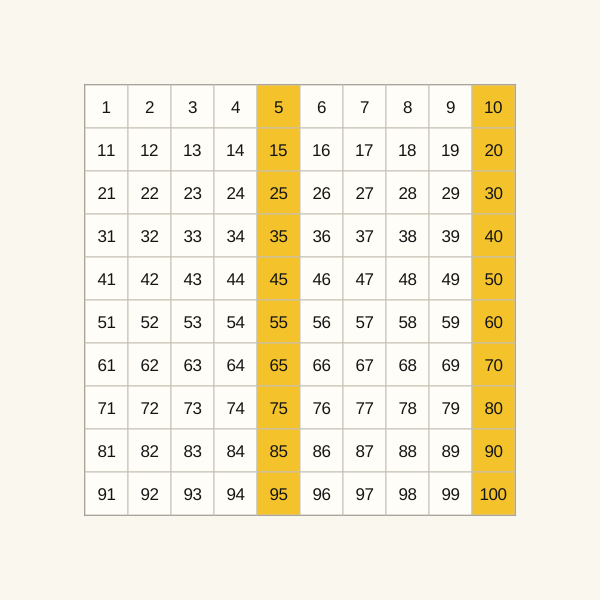
Hundred Charts
Ten-column number grids for exploring counting sequences and relationships between rows and columns.
 Explore
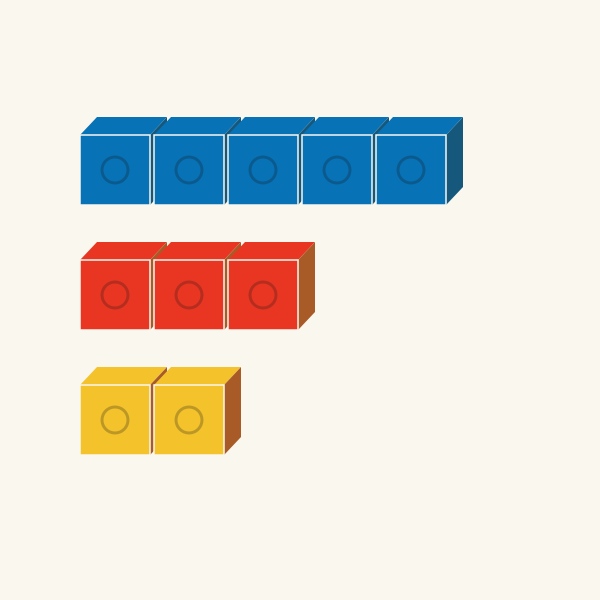
Linking Cubes
Equal-sized cubes that connect into trains, groups, arrays, and three-dimensional builds.
 Explore
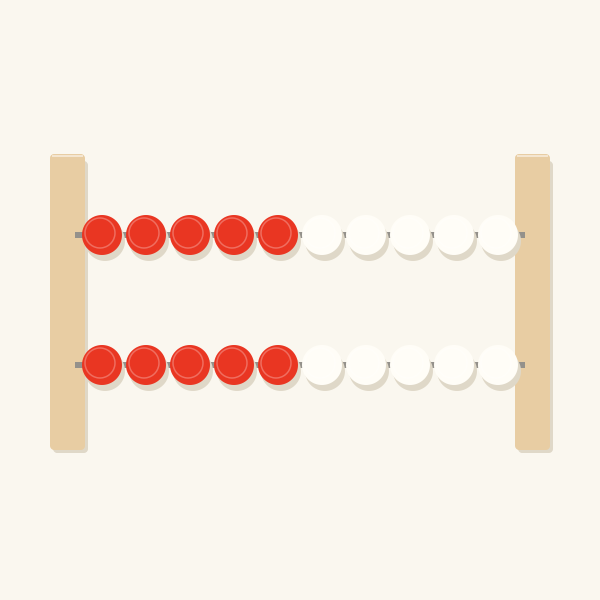
Rekenreks
Bead racks arranged in groups of five and ten for showing numbers and comparing addition strategies.
 Explore
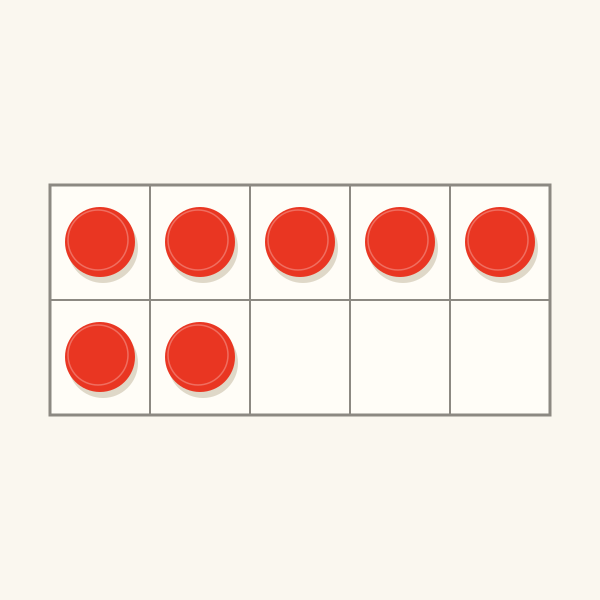
Ten Frames
Two rows of five spaces that organize counters around the benchmarks five and ten.
 Explore
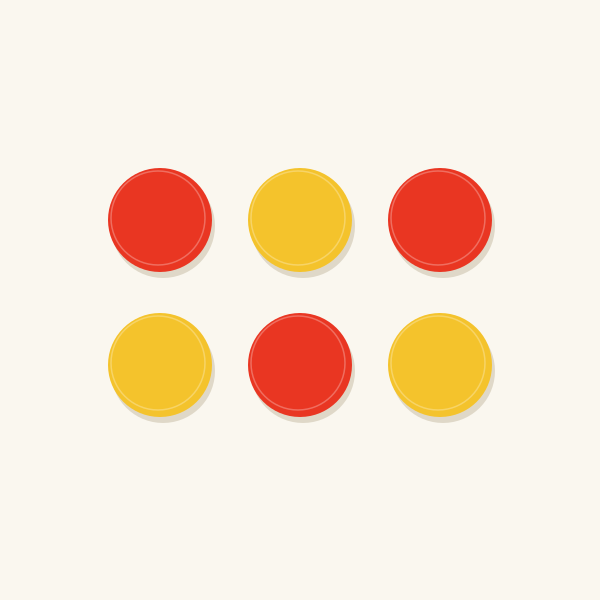
Two-Color Counters
Small disks with contrasting sides for sorting, counting, and representing two parts of a quantity.
 Explore