Dice
Objects with numbered or dotted faces for generating values, playing number games, and collecting chance data.
What
they teach.
Simple materials.
Powerful mathematical ideas.
Dot quantities
Recognize and describe small groups arranged as familiar dot patterns.
Operations
Combine rolled values through addition, difference, or another agreed rule.
Chance and data
Record repeated outcomes and compare possible results.
How to use them.
Start with curiosity. Make room for discovery.
Inspect the faces
Check the die’s labels and list possible outcomes before rolling.
Set the rule
Decide whether a roll represents a number, a move, a sum, or another quantity.
Record consistently
Make one tally for each trial and compare the observations with your prediction.
Try an activity
Which sum appears most?
Roll two standard six-sided dice and record each sum for thirty trials. Compare the results with a table of all 36 ordered face pairs. Explain why sums have different numbers of combinations.
Outcomes and sums are different things
With two standard six-sided dice, 1 then 6 and 6 then 1 are two distinct ordered outcomes, both giving a sum of seven. A sum of two has only one ordered pair, 1 and 1. If the dice are fair and independent, the 36 ordered pairs are equally likely; the eleven possible sums are not.
Thirty rolls will rarely match theoretical proportions exactly. Treat a short experiment as a set of observations to compare with a model, rather than as a guarantee of what must happen next.
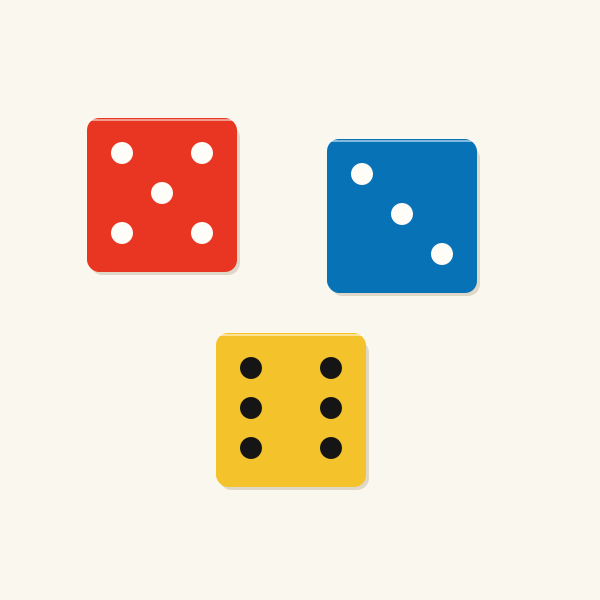
For younger learners, a single die can prompt a simpler conversation. Ask how a pattern of five dots is grouped. Someone may see four and one, while another sees two, one, and two. Place counters to reproduce each explanation.
Choose your toolkit.
Find a format that fits your setting.
Check face labels, legibility, size, and how many dice a task needs. Dot dice, numeral dice, and ten-sided dice support different starting points.
Physical options link to Amazon. Illustrations show the material, not the exact product.
Physical option · acrylic
jrceliy Six-Sided Colored Dice (50 pieces, 14 mm)
Fifty six-sided dot dice in ten translucent colors, with a storage box for number games and probability investigations. Each die measures 14 mm.
View on AmazonPhysical option · plastic
Bicycle Six-Sided Dice (5 pieces, 16 mm)
Five white six-sided dice with black dots, each measuring 16 mm. A smaller set for number games, comparing totals, and collecting results from repeated rolls.
View on Amazon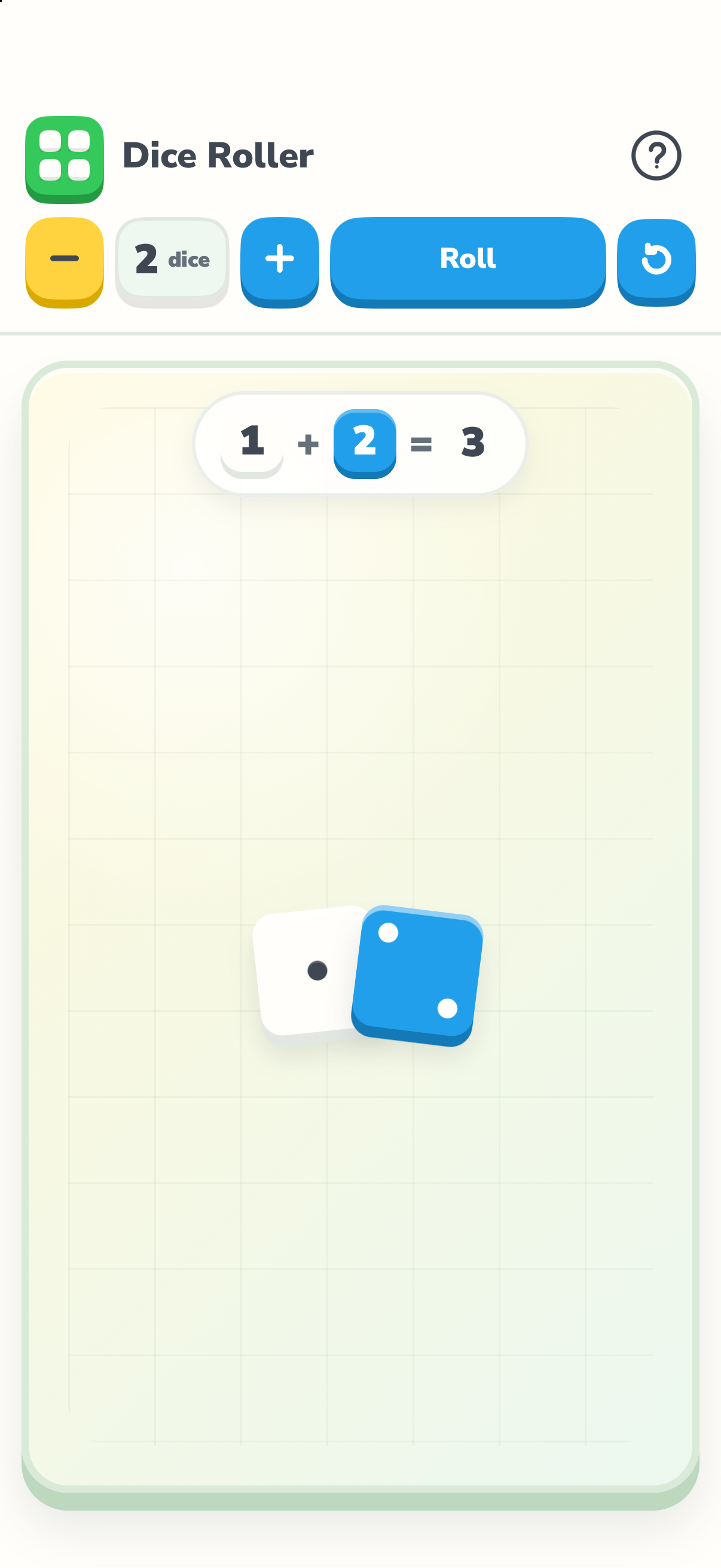
Digital alternative
Manipulatives app
Use the dice model for a short counting or chance experiment. Record each result and compare the observations with your prediction. Physical dice let learners explore the roll itself as well.
Explore the appSee our editorial and buying policy. Reviewed .
Related tools.
Explore the library →Probability Spinners
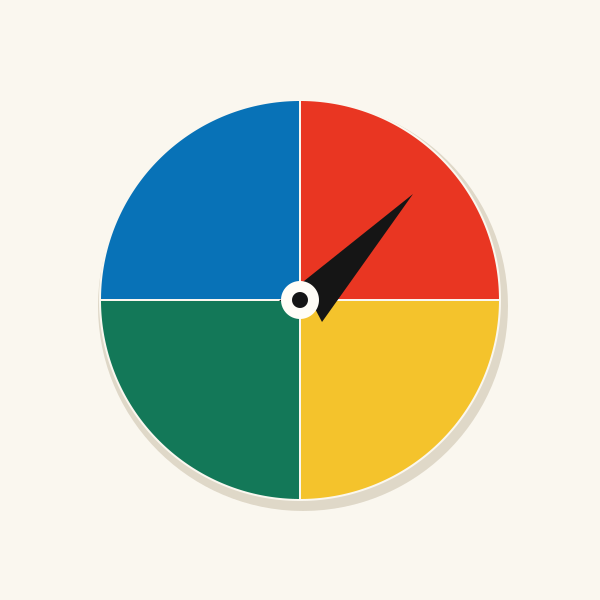
Rotating pointers and marked sectors for exploring possible outcomes and recording chance experiments.
 Explore
Two-Color Counters
Small disks with contrasting sides for sorting, counting, and representing two parts of a quantity.
 Explore
Hundred Charts
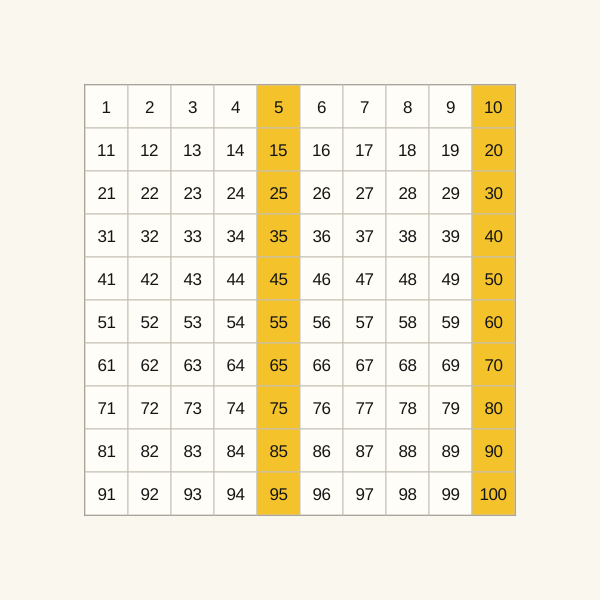
Ten-column number grids for exploring counting sequences and relationships between rows and columns.
 Explore