Rekenreks
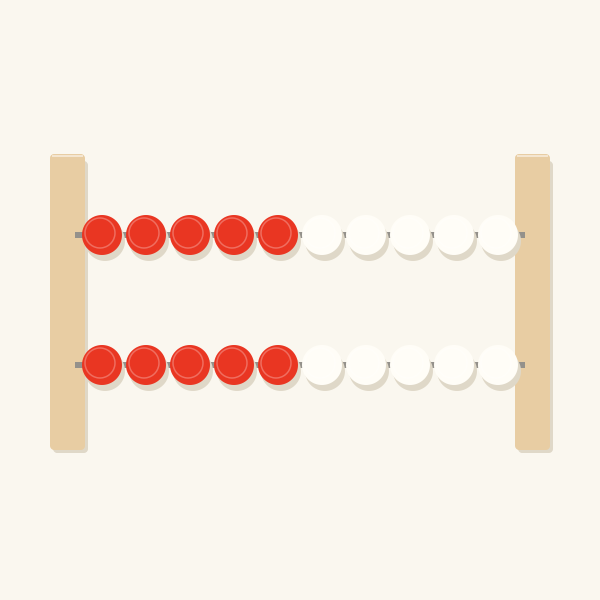
Bead racks arranged in groups of five and ten for showing numbers and comparing addition strategies.
What
they teach.
Simple materials.
Powerful mathematical ideas.
Structured quantities
Use color groups to see five and some more without counting every bead.
Part-whole relationships
Make the same total across two rows in different ways.
Addition strategies
Use the five and ten structure to explain how numbers combine.
How to use them.
Start with curiosity. Make room for discovery.
Choose a working side
Move all beads to one side, then agree that beads moved to the other side represent the number.
Show a number
Slide seven beads across together where possible. Describe the group as five and two.
Compare representations
Show twelve as ten and two, then six and six. Discuss how both arrangements represent the same total.
Try an activity
Flash and explain
Show a quantity briefly, then cover the rack. Ask what the learner saw and how they grouped the beads. Reveal it again to check their explanation, without treating speed as the goal.
Make the five visible
A common rekenrek has two rows of ten beads, with five beads of each color in every row. The color change gives a visible group of five. The Math Learning Center’s Number Rack resources use this structure to explore groups of five and ten.
Choose a consistent working direction for a session. If the quantity is represented by beads on the left, make enough space between those beads and the unused ones for everyone to see the boundary.
When a learner shows eight, ask how they could change it to ten without starting over. They might see the two remaining beads immediately or count them. Both responses provide a starting point for explaining the relationship between eight and ten. Keep the emphasis on what the groups mean, rather than on racing to push beads.
Choose your toolkit.
Find a format that fits your setting.
Look for clearly grouped fives, enough space to separate moved beads, and smooth rods. A two-row rack supports work to twenty; larger racks add further rows. The selected wooden frame has ten rows for work to 100; use just the first two rows for the introductory activities above.
Physical options link to Amazon. Illustrations show the material, not the exact product.
Physical option · wooden 100-bead frame
hand2mind Mini 100-Bead Wooden Rekenrek
Ten rows of ten beads, each grouped into five red and five white beads, support counting and addition up to 100. Use just the first two rows for introductory work to twenty.
View on Amazon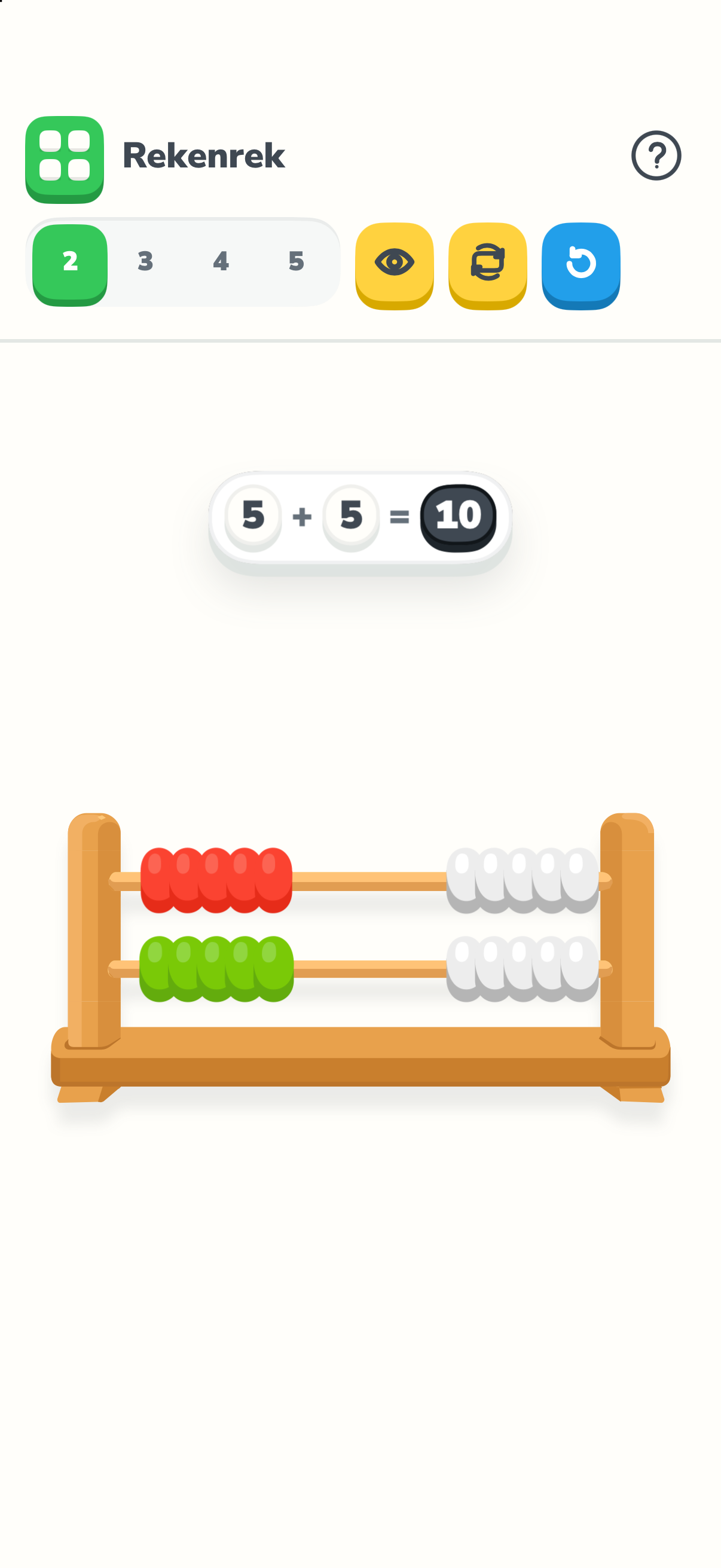
Digital alternative
Manipulatives app
The bead layout makes groups of five and ten visible. Ask how a quantity is grouped and how many more beads would make ten. A physical rack lets learners feel the beads move too.
Explore the appSee our editorial and buying policy. Reviewed .
Sources and further reading
- The Math Learning Center: Number Rack — The grouping of beads in fives and tens on a rekenrek.
Related tools.
Explore the library →Ten Frames
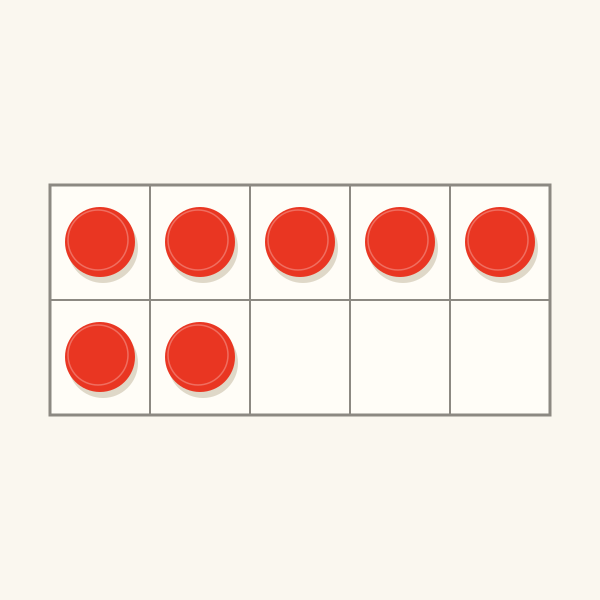
Two rows of five spaces that organize counters around the benchmarks five and ten.
 Explore
Two-Color Counters
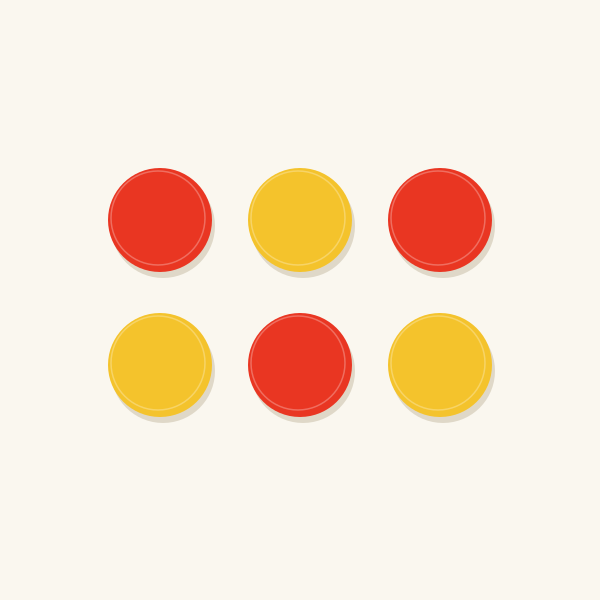
Small disks with contrasting sides for sorting, counting, and representing two parts of a quantity.
 Explore
Number Lines
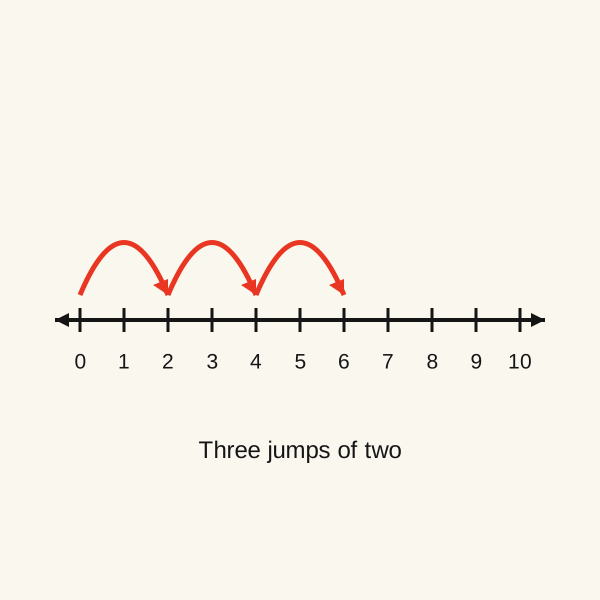
Lines with equal unit spacing for locating numbers, comparing distance, and representing operations.
 Explore