Two-Color
Counters
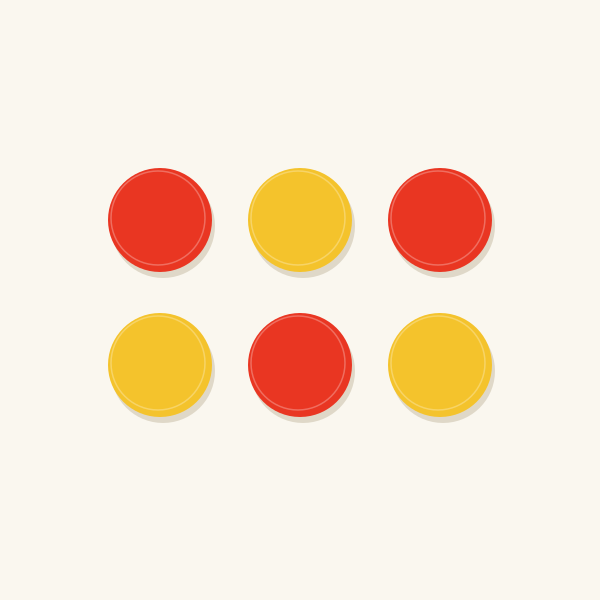
Small disks with contrasting sides for sorting, counting, and representing two parts of a quantity.
What
they teach.
Simple materials.
Powerful mathematical ideas.
Counting
Move each counter once while pairing it with a spoken number.
Number composition
Use two colors to show different ways to split the same total.
Signed quantities
With an explicit convention, pair positive and negative counters to model zero.
How to use them.
Start with curiosity. Make room for discovery.
Build the total
Count out eight counters and keep that total on the table.
Show two parts
Turn some counters to the other color. Describe the red part and the yellow part.
Record a match
Write an addition equation for the arrangement, then turn one counter and record the new combination.
Try an activity
Find every split of eight
Arrange eight counters in a line. Begin with all one color, then flip one at a time. Record each pair of parts, including zero and eight. Explain how you know none are missing.
Give each color a clear meaning
For a first number-composition task, the colors simply show two groups. Six red and two yellow counters still make eight counters altogether. Keep the total fixed while exploring how many ways it can be split.
For signed-number work, establish a different convention: for example, red represents positive one and yellow negative one. One of each then represents a zero pair. Do not assume a learner will infer that rule from the colors or from an earlier addition activity.
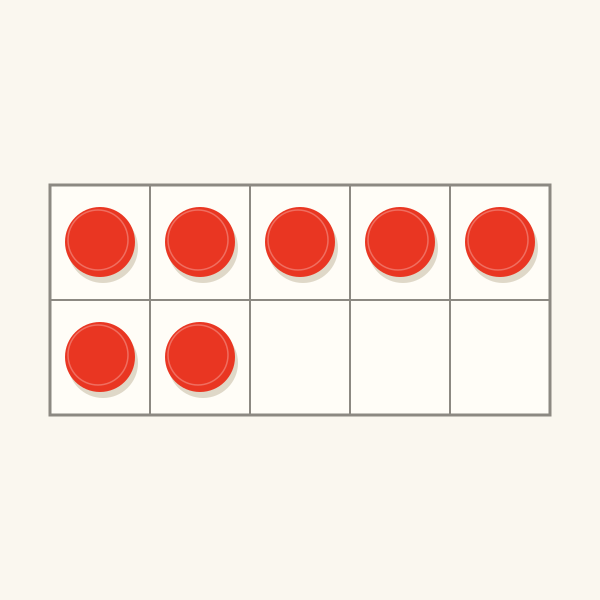
A ten frame adds a useful structure to loose counters. Compare an unorganized collection of seven with seven arranged in a frame. Ask what the arrangement lets you see without recounting the whole set.
Choose your toolkit.
Find a format that fits your setting.
Check counter diameter, contrast, and quantity. Two-sided disks suit part-whole and integer tasks; two separate bags of colors are a different format.
Physical options link to Amazon. Illustrations show the material, not the exact product.
Physical option · plastic
Learning Resources Two-Color Counters, Set of 200
200 plastic counters, each one inch across with a red side and a yellow side, for showing two parts of a total. Includes an activity guide.
View on Amazon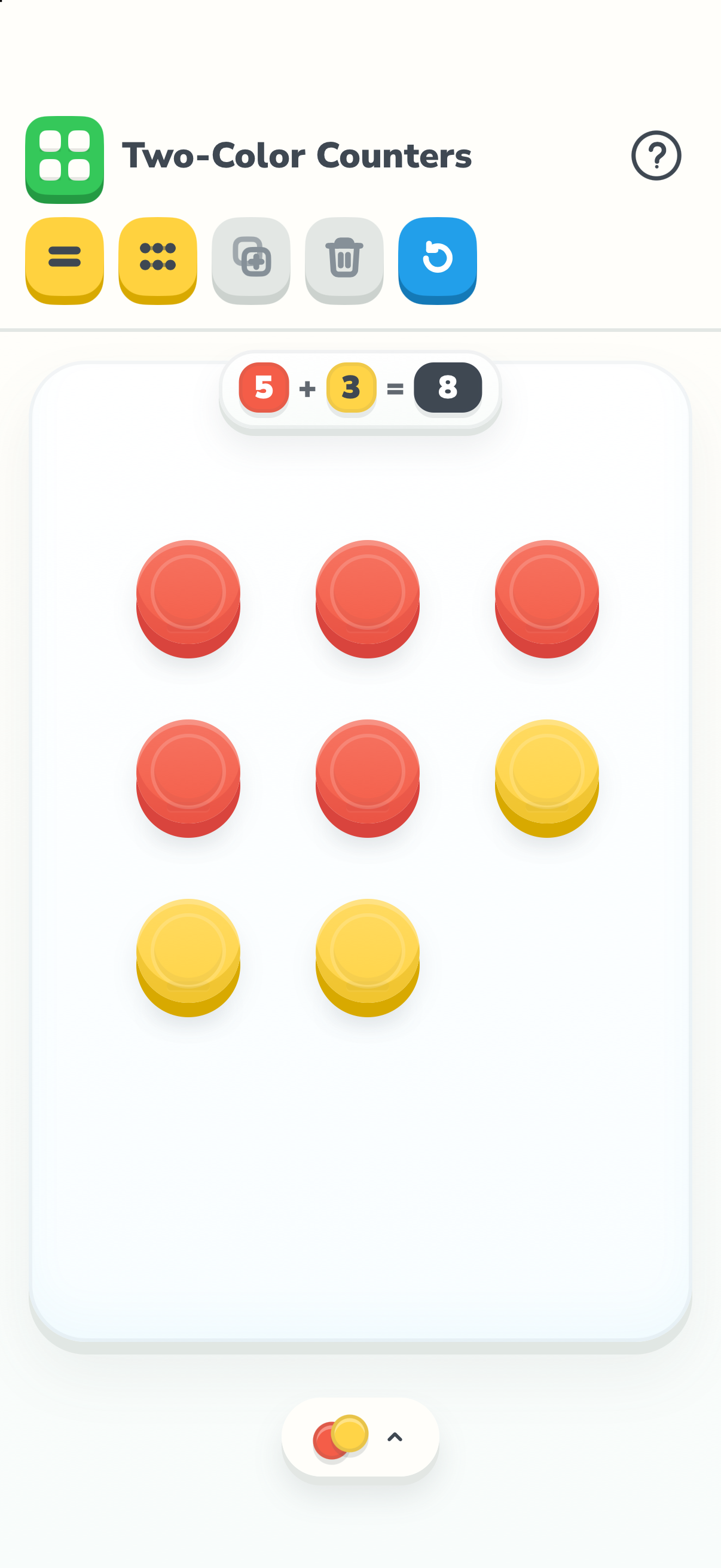
Digital alternative
Manipulatives app
Use the two colors to show two parts of a total. Agree on what each counter represents before using the same model for positive and negative numbers.
Explore the appSee our editorial and buying policy. Reviewed .
Related tools.
Explore the library →Ten Frames
Two rows of five spaces that organize counters around the benchmarks five and ten.
 Explore
Rekenreks
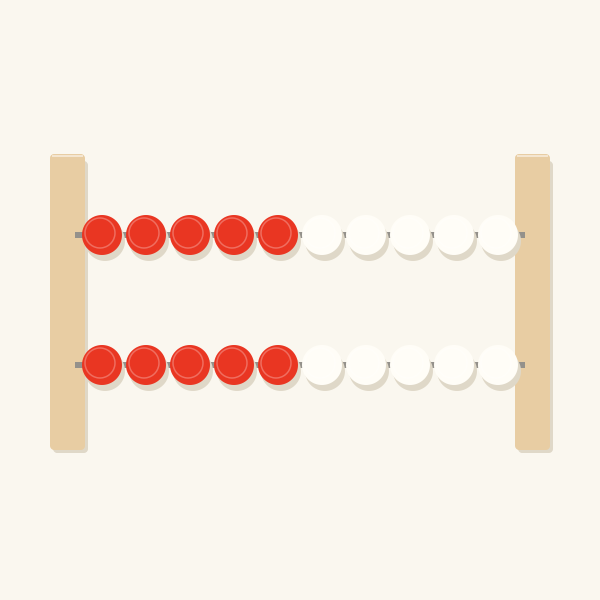
Bead racks arranged in groups of five and ten for showing numbers and comparing addition strategies.
 Explore
Linking Cubes
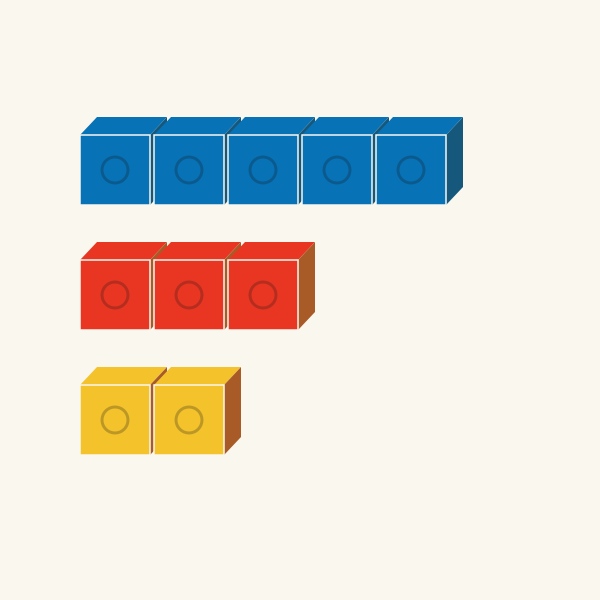
Equal-sized cubes that connect into trains, groups, arrays, and three-dimensional builds.
 Explore