Linking
Cubes
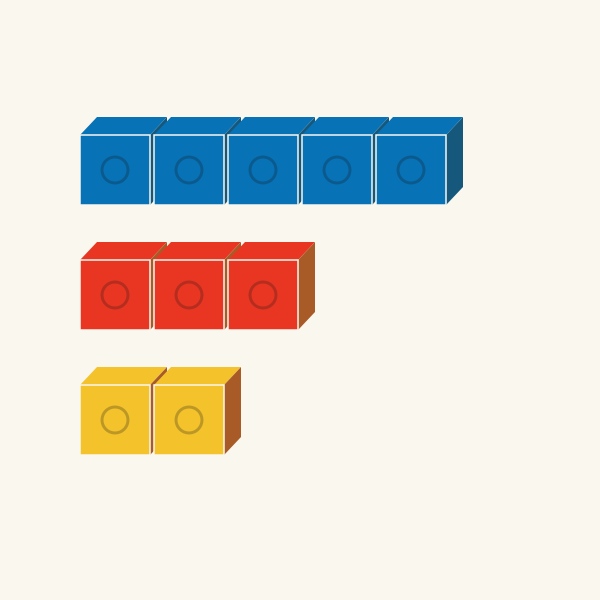
Equal-sized cubes that connect into trains, groups, arrays, and three-dimensional builds.
What
they teach.
Simple materials.
Powerful mathematical ideas.
Grouping
Join and break apart cube trains to show parts and totals.
Equal groups
Build several trains with the same number of cubes.
Measurement
Measure a length with repeated equal units placed without gaps.
How to use them.
Start with curiosity. Make room for discovery.
Check the connections
Build and take apart a short train. Count cubes rather than connection points.
Make equal groups
Build four trains of three cubes and compare their lengths.
Connect the model to symbols
Count the whole collection and record 4 × 3 = 12, explaining what each number represents.
Try an activity
Build every rectangle for twelve
Use twelve cubes to make single-layer rectangular arrays. Try one row, two rows, three rows, and other possibilities. Record rows and cubes per row for each complete rectangle.
Decide what one cube represents
One cube may stand for one object, one length unit, or one cubic unit, depending on the task. Name that meaning before recording an answer. A train of five cubes is five units long when measured along its length, but it contains five cubic units of volume when each cube is the volume unit.
For measuring an object, line up the first cube with the object’s starting edge. Use equal-sized cubes, with no gaps or overlaps. A leftover portion is a reason to discuss an approximate measure, not to quietly change the size of the unit.
Cubes also offer a way to build tens before introducing fixed base-ten rods. Learners can join ten separate ones, then compare their train with a rod that already represents that group.
Choose your toolkit.
Find a format that fits your setting.
Check how the cubes connect: some link on two faces and others on several. Choose a connection strength the learner can manage and enough repeated colors for your tasks.
Physical options link to Amazon. Illustrations show the material, not the exact product.
Physical option · plastic
hand2mind Centimeter Cubes, Set of 500
Connecting centimeter cubes can be joined into lengths, equal groups, and small arrays. Check cube size against your learners and storage needs.
View on Amazon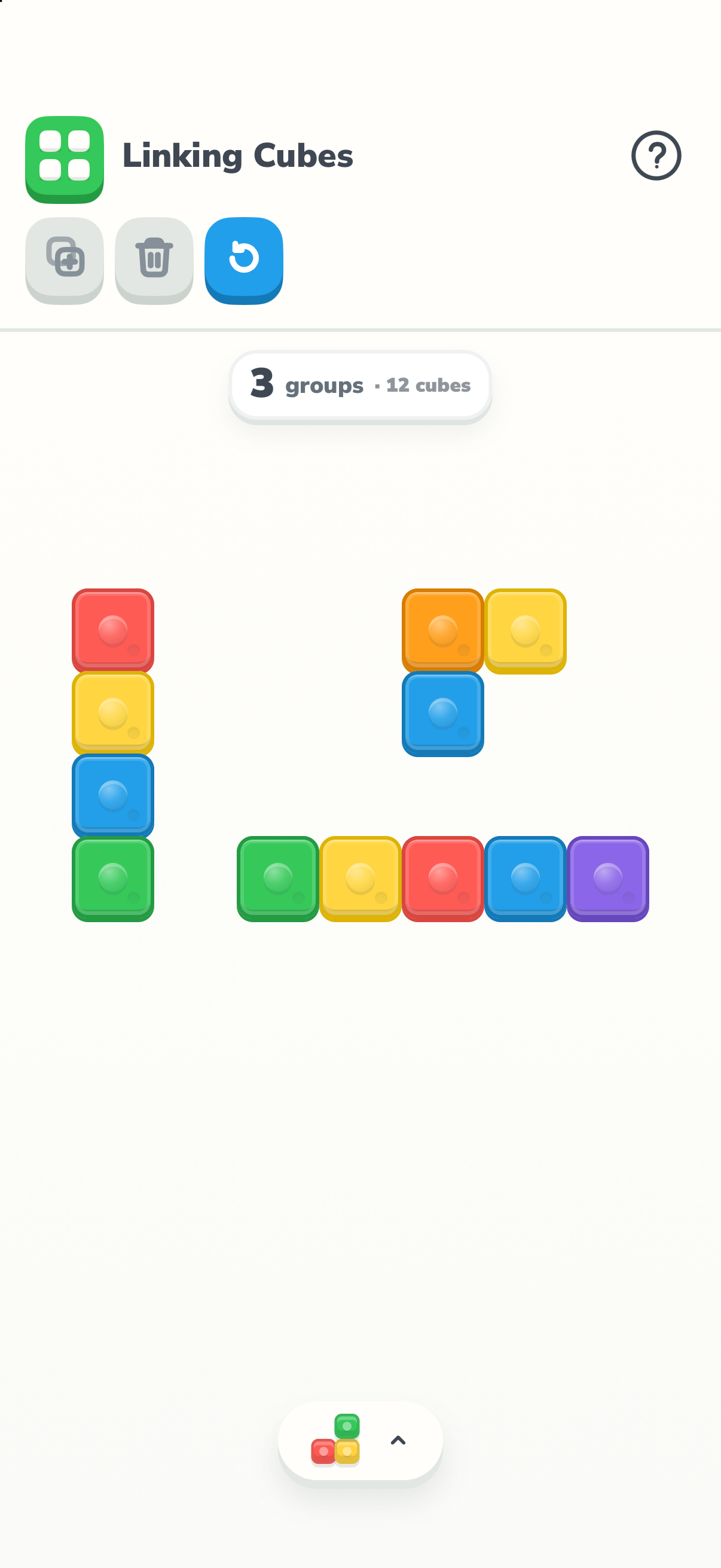
Digital alternative
Manipulatives app
The cube preview offers a visual model for discussing groups. Use physical linking cubes when joining pieces by hand or building a three-dimensional structure is part of the task.
Explore the appSee our editorial and buying policy. Reviewed .
Related tools.
Explore the library →Cuisenaire Rods
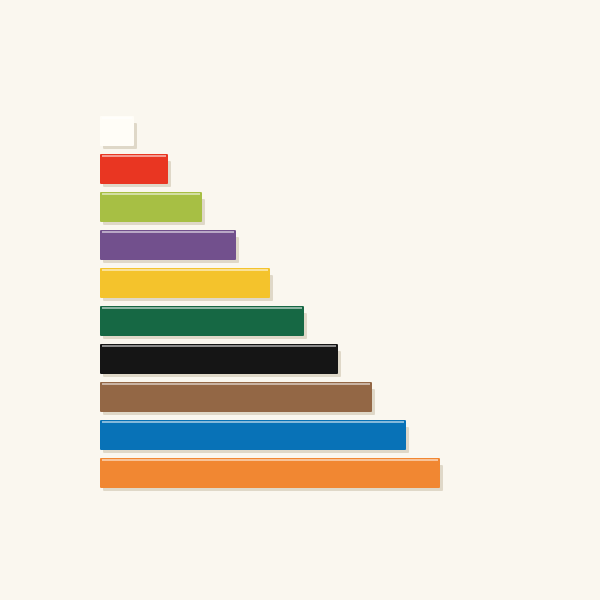
Colored rods with lengths in a one-to-ten relationship for comparing numbers, operations, and fractions.
 Explore
Base-Ten Blocks
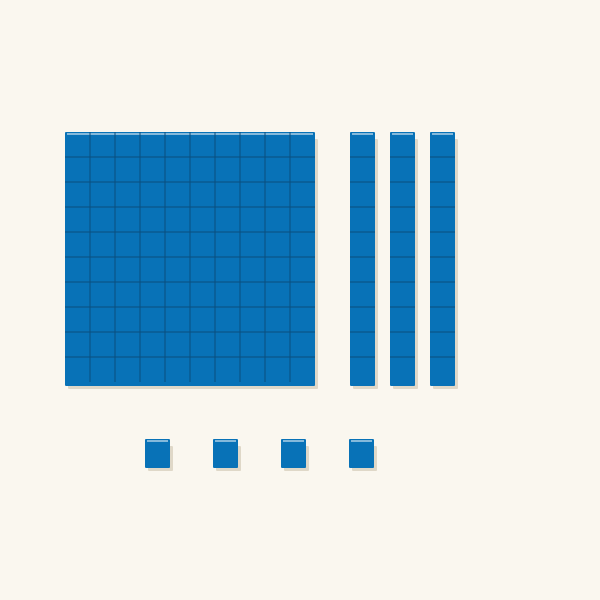
Units, rods, flats, and larger blocks that represent the grouping structure of base-ten numbers.
 Explore
Two-Color Counters
Small disks with contrasting sides for sorting, counting, and representing two parts of a quantity.
 Explore