Tangrams
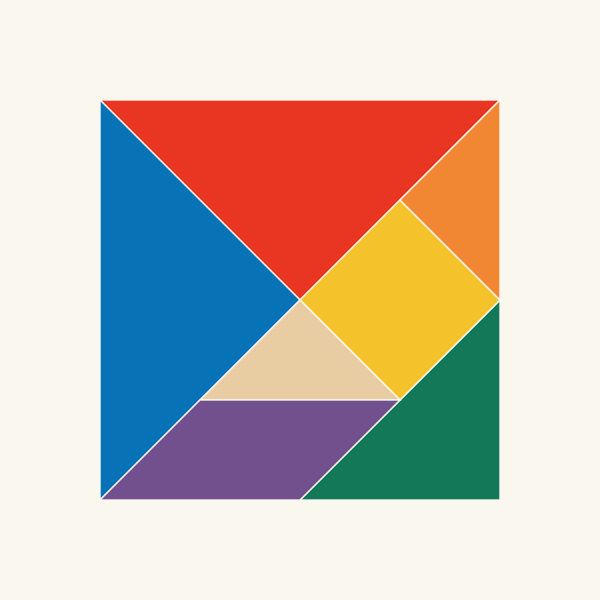
A seven-piece dissection puzzle for composing shapes, comparing area, and reasoning about position.
What
they teach.
Simple materials.
Powerful mathematical ideas.
Shape composition
Combine familiar polygons to make new outlines.
Spatial reasoning
Rotate and flip pieces to test whether they fit a position.
Area relationships
Compare how smaller pieces cover the same area as larger pieces.
How to use them.
Start with curiosity. Make room for discovery.
Explore the seven pieces
Sort the triangles, square, and parallelogram. Compare sizes and angles.
Cover an outline
Choose a silhouette and arrange all seven pieces without overlaps.
Describe your decisions
Explain which edge, corner, or area relationship helped you place a difficult piece.
Try an activity
Make the square in stages
Start with the two smallest triangles. Find ways they can combine into a square, a triangle, and a parallelogram. Then use all seven pieces to rebuild the large square.
A piece can look different when it moves
Turn the small square so it stands on a corner and ask whether it is still a square. The orientation has changed, but its side lengths and angles have not. Tangrams make this distinction easy to discuss while solving a puzzle.
The standard set has two large triangles, one medium triangle, two small triangles, a square, and a parallelogram. With the assembled large square as the whole, each small triangle has one sixteenth of the total area. Compare pieces by covering or composing areas instead of judging their longest sides alone.
When a puzzle becomes frustrating, reveal the position of one piece or use an outline with some internal boundaries. This changes the amount of spatial information available while preserving the central task of finding how shapes fit.
Choose your toolkit.
Find a format that fits your setting.
Check that each set includes the standard seven pieces and appropriately scaled outlines if those are supplied. Loose pieces allow flipping; some inset boards restrict it.
Physical options link to Amazon. Illustrations show the material, not the exact product.
Physical option · plastic
Learning Resources 4-Color Tangrams (30 Sets)
Thirty complete seven-piece tangram sets in four colors suit whole-class puzzles and small-group comparisons. A plastic storage bucket and activity guide are included.
View on AmazonPhysical option · wood
3 Otters Wooden Tangram Puzzles (4 Sets)
Four complete seven-piece wooden tangram sets provide 28 pieces for building silhouettes and comparing solutions. An explanation card is included.
View on AmazonSee our editorial and buying policy. Reviewed .
Related tools.
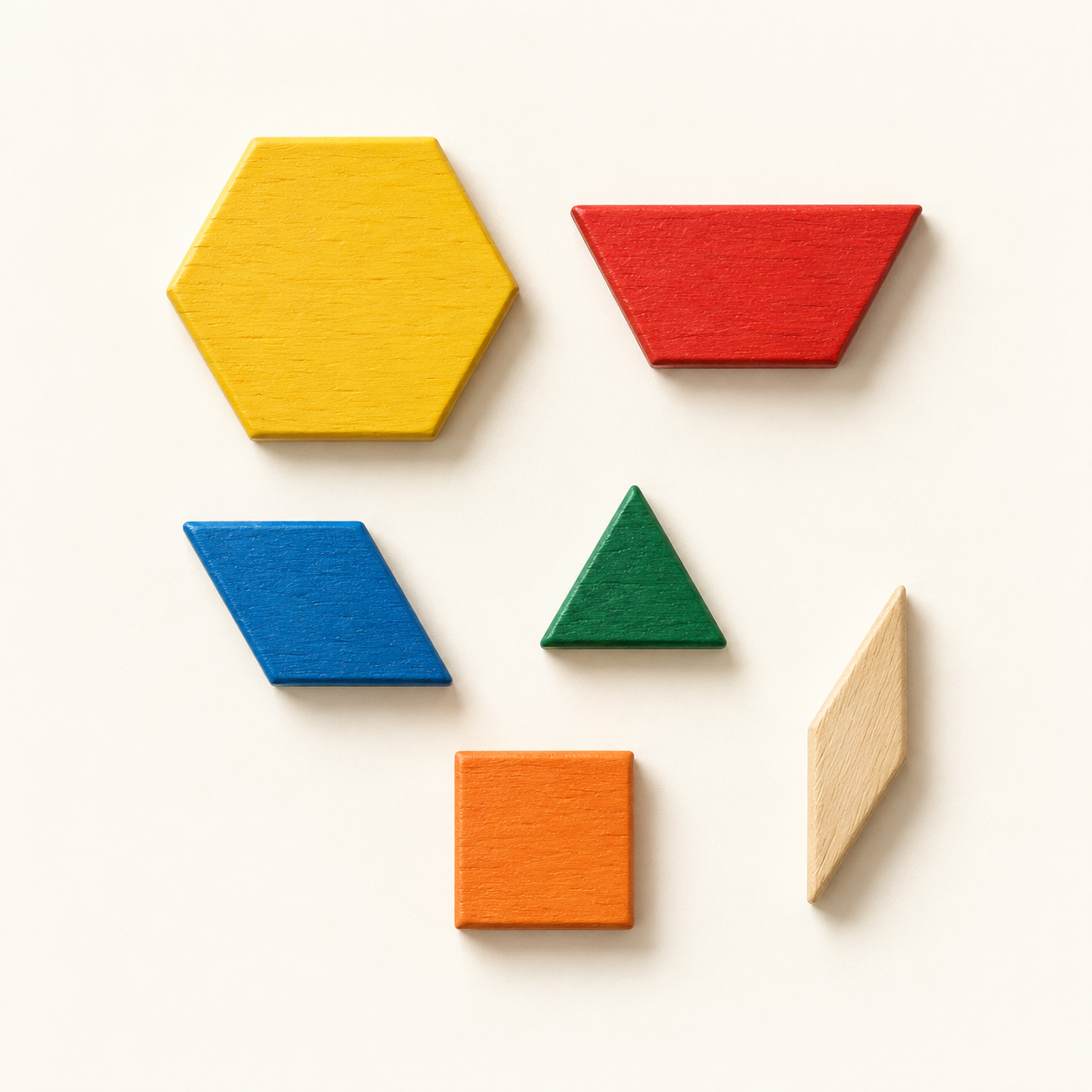
Explore the library →Pattern Blocks
Geometric pieces for building shapes, exploring symmetry, and comparing parts of a whole.
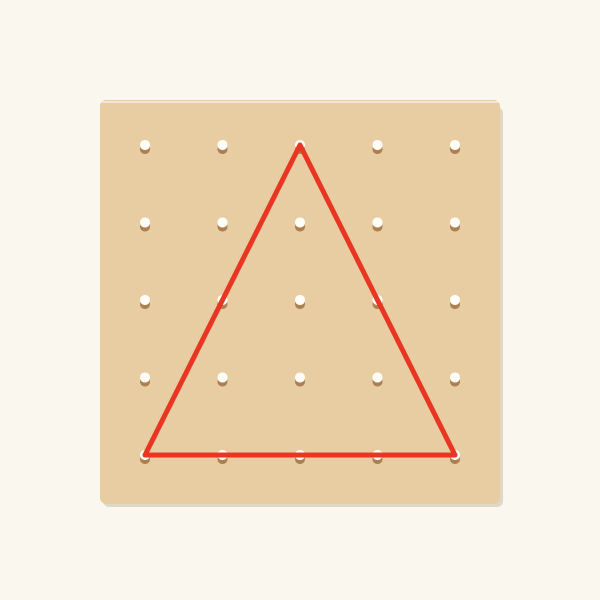
Geoboards
Peg boards and bands for making polygons and exploring their sides, area, and perimeter.
 Explore
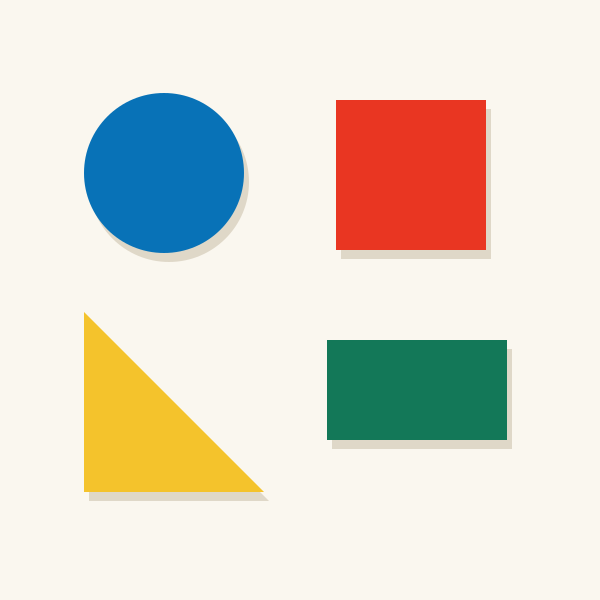
Geometric Shapes
Movable flat shapes for sorting attributes, composing pictures, and explaining how parts fit together.
 Explore