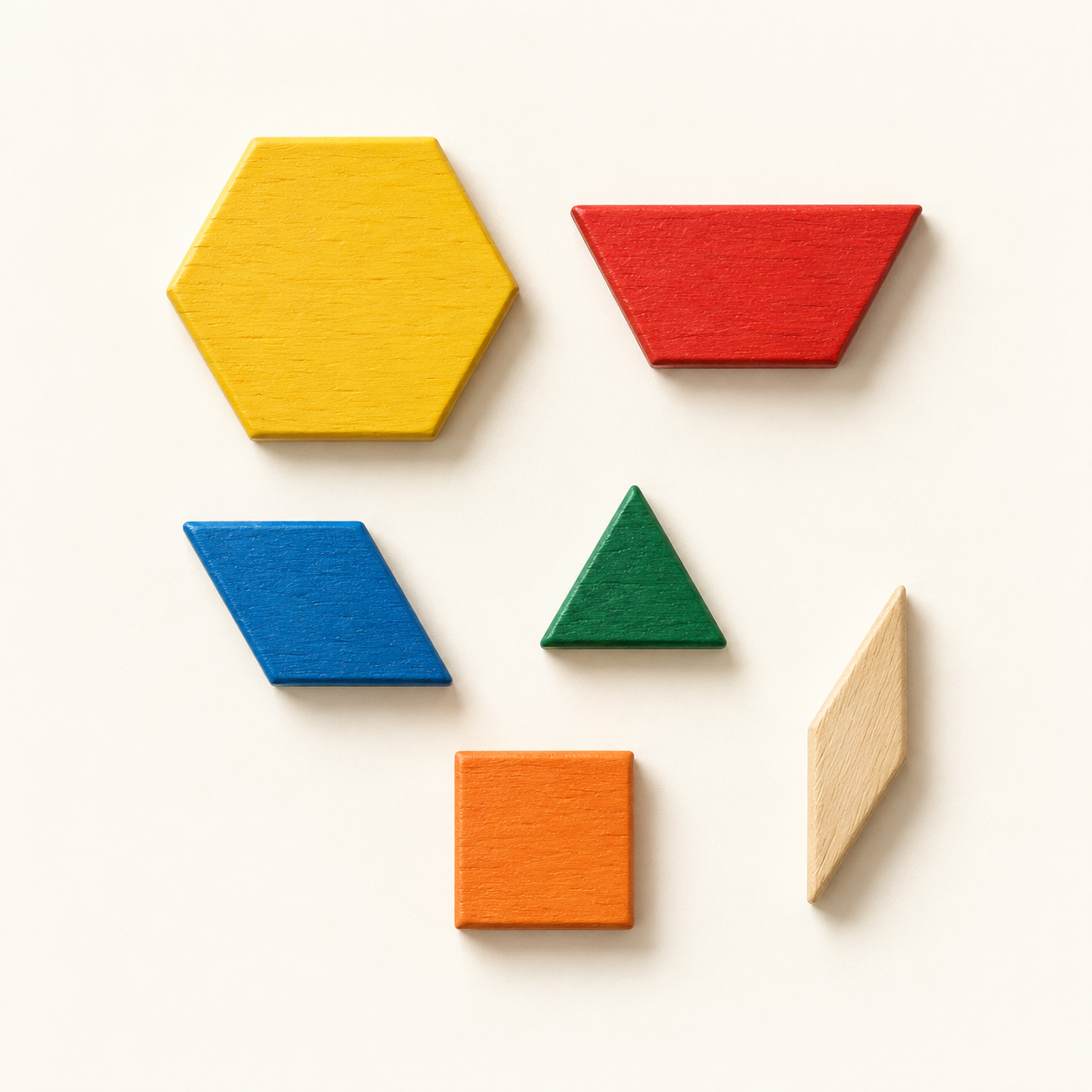
Geoboards
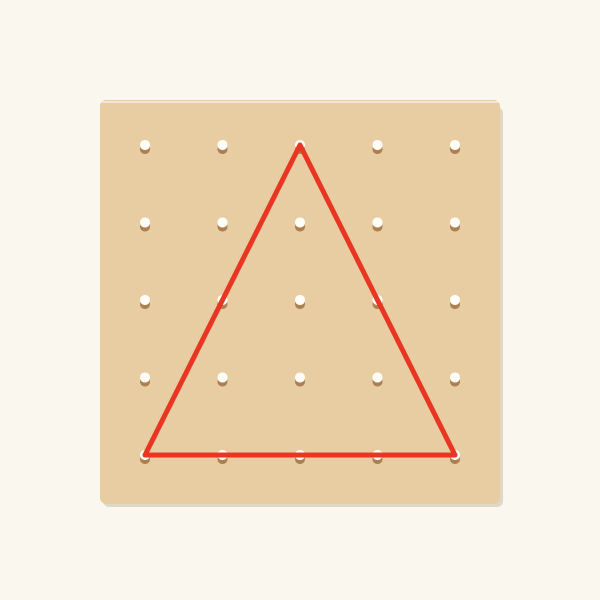
Peg boards and bands for making polygons and exploring their sides, area, and perimeter.
What
they teach.
Simple materials.
Powerful mathematical ideas.
Polygon properties
Construct and compare shapes by their sides and corners.
Area and perimeter
Contrast the space inside a shape with the distance around its boundary.
Transformations
Move or reflect a shape on the grid and describe what stays the same.
How to use them.
Start with curiosity. Make room for discovery.
Choose a grid unit
Treat the distance between neighboring horizontal or vertical pegs as one length unit.
Build a shape
Stretch a band around pegs to make a rectangle. Identify the boundary and interior.
Compare two measures
Count unit squares for area and unit edge lengths for perimeter. Keep the two units distinct.
Try an activity
Same area, different boundary
Make a 1-by-4 rectangle and a 2-by-2 square. Both enclose four square units. Count their perimeter lengths and explain why those lengths differ.
Count spaces, not pegs
A row of four pegs contains three intervals between neighboring pegs. When a side follows the grid, its length is the number of intervals, not the number of pegs it touches. The same distinction matters when drawing the model on squared paper.
Begin area and perimeter comparisons with horizontal and vertical sides. A diagonal between neighboring rows and columns is longer than one grid unit; counting it as one gives an incorrect perimeter. Diagonals can be explored later with suitable measurement or reasoning.
Use bands gently and follow the manufacturer’s age guidance. A drawing on a dot grid can keep the same mathematical question available when stretching bands is awkward. Learners can explain a shape by describing which grid points its vertices occupy.
Choose your toolkit.
Find a format that fits your setting.
Look for sturdy pegs, a clearly visible grid, and bands suited to the board size. Square and circular peg layouts support different activities; check which is included.
Physical options link to Amazon. Illustrations show the material, not the exact product.
Physical option · wood and elastic bands
Thoth Wooden Geoboard with Pattern Cards (8 × 8)
An 8 × 8 peg grid for building and comparing shapes, with rubber bands, 36 pattern cards, and four blank cards for creating your own designs.
View on AmazonPhysical option · wood and elastic bands
HEELWIRE Wooden Geoboards (2-pack)
A two-board set with pattern cards, blank cards, and rubber bands. Use the boards side by side to compare shapes or try two different designs for the same task.
View on Amazon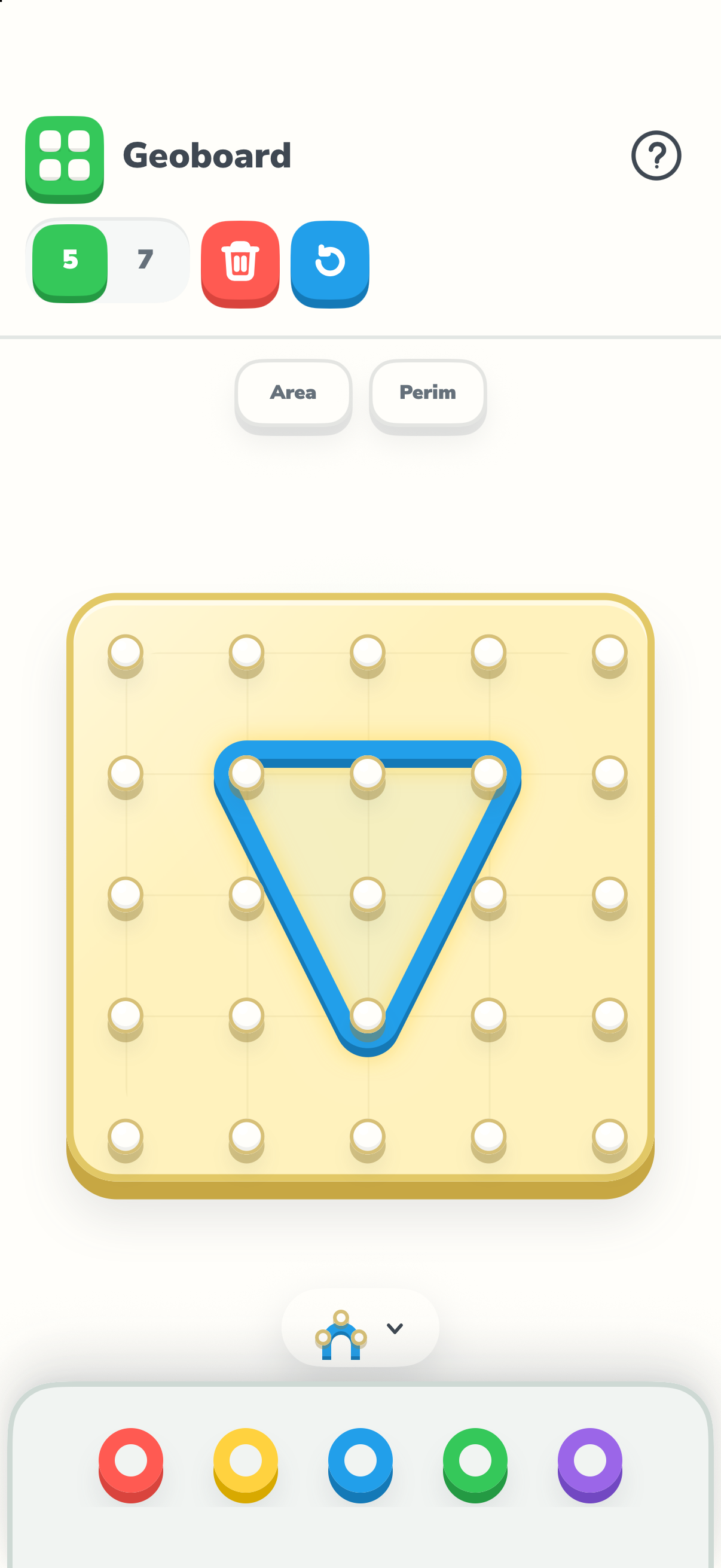
Digital alternative
Manipulatives app
The on-screen peg board gives you a way to discuss vertices, sides, and enclosed regions. Physical bands add a different experience: learners can feel their tension as they change a shape.
Explore the appSee our editorial and buying policy. Reviewed .
Related tools.
Explore the library →Geometric Shapes
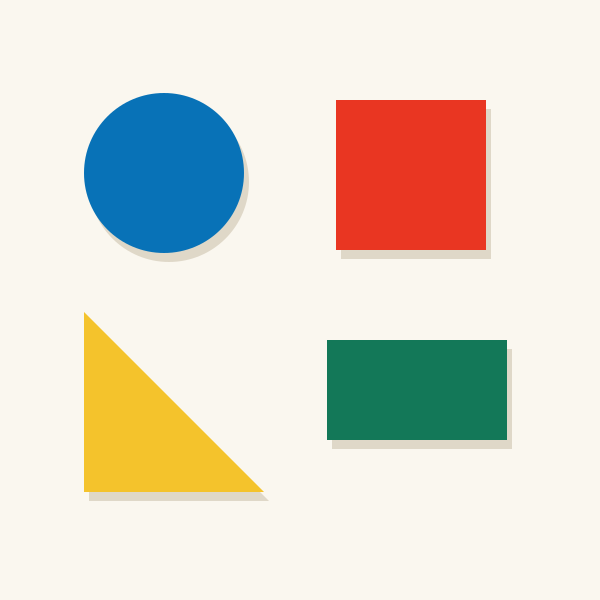
Movable flat shapes for sorting attributes, composing pictures, and explaining how parts fit together.
 Explore
Tangrams
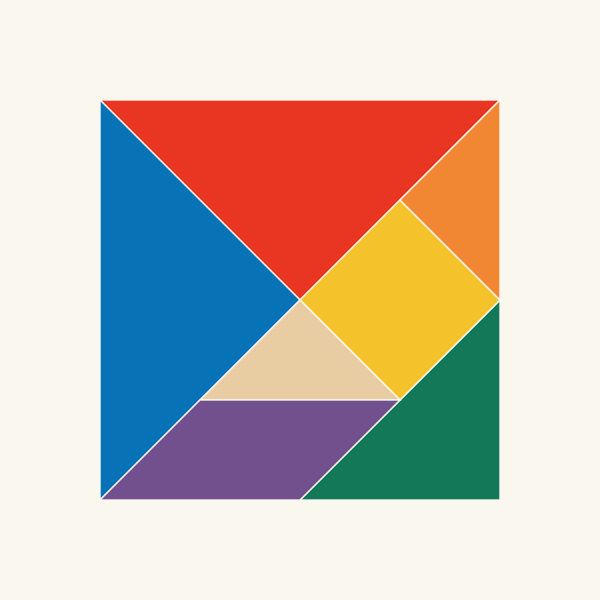
A seven-piece dissection puzzle for composing shapes, comparing area, and reasoning about position.
 Explore
Pattern Blocks
Geometric pieces for building shapes, exploring symmetry, and comparing parts of a whole.