Geometric
Shapes
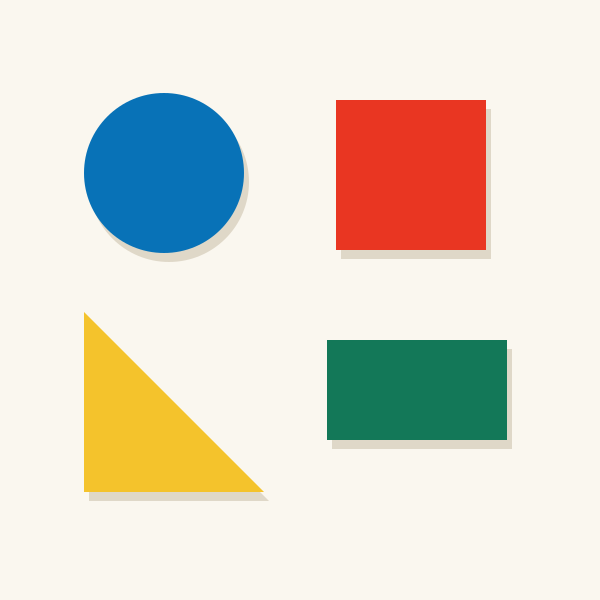
Movable flat shapes for sorting attributes, composing pictures, and explaining how parts fit together.
What
they teach.
Simple materials.
Powerful mathematical ideas.
Shape attributes
Sort by straight or curved boundaries, sides, and corners. A shape keeps its name when it turns.
Composition
Join smaller pieces to make a larger figure and describe which edges meet.
Sorting rules
Group pieces by one attribute, then change the rule and explain which pieces move.
How to use them.
Start with curiosity. Make room for discovery.
Describe a piece
Choose a shape and trace its boundary. Count straight sides and corners, and notice any curved parts.
Build and turn
Use two or more pieces to build a picture. Turn one piece and describe what changes and what stays the same.
Explain your arrangement
Name the pieces and how they fit. Compare your design with another arrangement made from the same pieces.
Try an activity
Same pieces, two pictures
Choose a square and two matching right triangles. Make one picture, then rearrange the same three pieces into a different picture. Describe the sides that touch. Can you build a larger square if the triangle sizes fit?
A shape is more than its color
Begin with a few pieces and a question: which have only straight sides? Which have a curved boundary? Turn a square so one corner points upward. It is still a square: its four equal sides and four right angles have not changed. Comparing the turned piece with an upright one helps separate a shape’s attributes from its position.
Try sorting twice. First group by shape, then by color. Ask why a piece moved when the rule changed. If a physical set includes different sizes or thicknesses, those are additional sorting rules. Avoid assuming that every geometric-shape set contains the same attributes.
Composition needs pieces that fit
Two matching right isosceles triangles can form a square when their long edges meet. A collection of arbitrary triangles cannot always do the same job. Check lengths and angles before asking learners to cover an outline exactly.
For an open-ended task, build a house, creature, or abstract design and name its parts. For an exact-fit investigation, move to tangrams or pattern blocks, which have defined relationships between their pieces. Geoboards show a figure’s outline with bands; flat pieces also show the interior area.
The app’s Shape Builder workspace uses flat pieces, including straight-edged and curved shapes. Physical attribute blocks are another way to explore sorting, while a reusable set of pattern blocks suits designs with matching edges. Choose the pieces that serve the question.
Choose your toolkit.
Find a format that fits your setting.
Choose a set whose shapes match the task: attribute blocks suit sorting, while pieces with matching edges suit composition. The selected wooden puzzle set includes 120 pieces and 20 double-sided pattern cards. Check the included shapes and dimensions before planning an exact-fit activity. A circle is useful for boundary comparisons but will not tile an area like squares.
Physical options link to Amazon. Illustrations show the material, not the exact product.
Physical option · wooden geometric puzzle pieces
Zycolo Wooden Geometric Puzzle Blocks (120 Pieces)
120 colorful wooden pieces for composing pictures and comparing shapes, with 20 double-sided pattern cards. Follow a card or create an arrangement of your own.
View on Amazon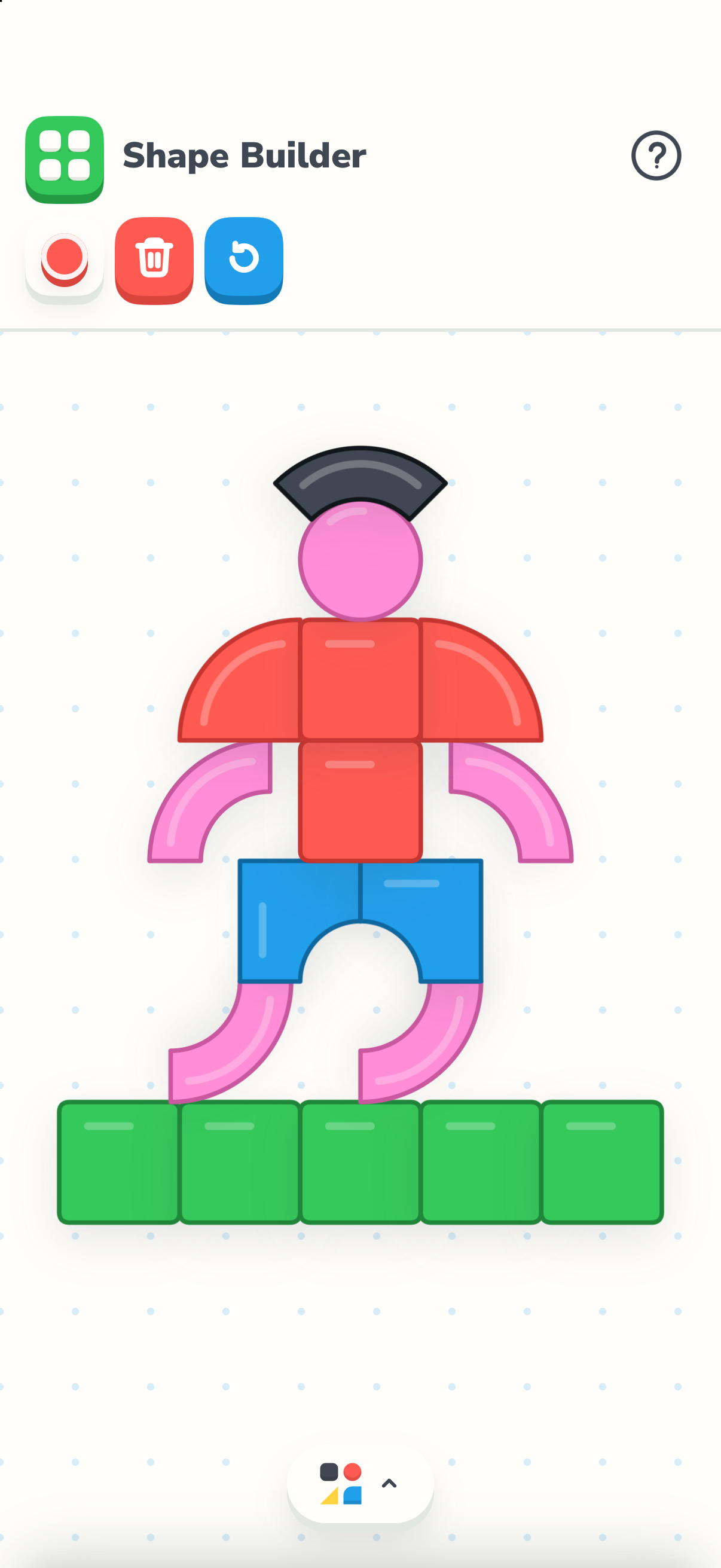
Digital alternative
Manipulatives app
The Shape Builder preview shows flat pieces for sorting and composing designs. Ask what stays the same when a piece turns. Use tangrams or standard pattern blocks for puzzles that depend on their particular piece relationships.
Explore the appSee our editorial and buying policy. Reviewed .
Sources and further reading
- Zycolo Wooden Geometric Shapes Puzzle Set — The selected set includes 120 colorful wooden puzzle pieces and 20 double-sided pattern cards for composing pictures.
Related tools.
Explore the library →Pattern Blocks
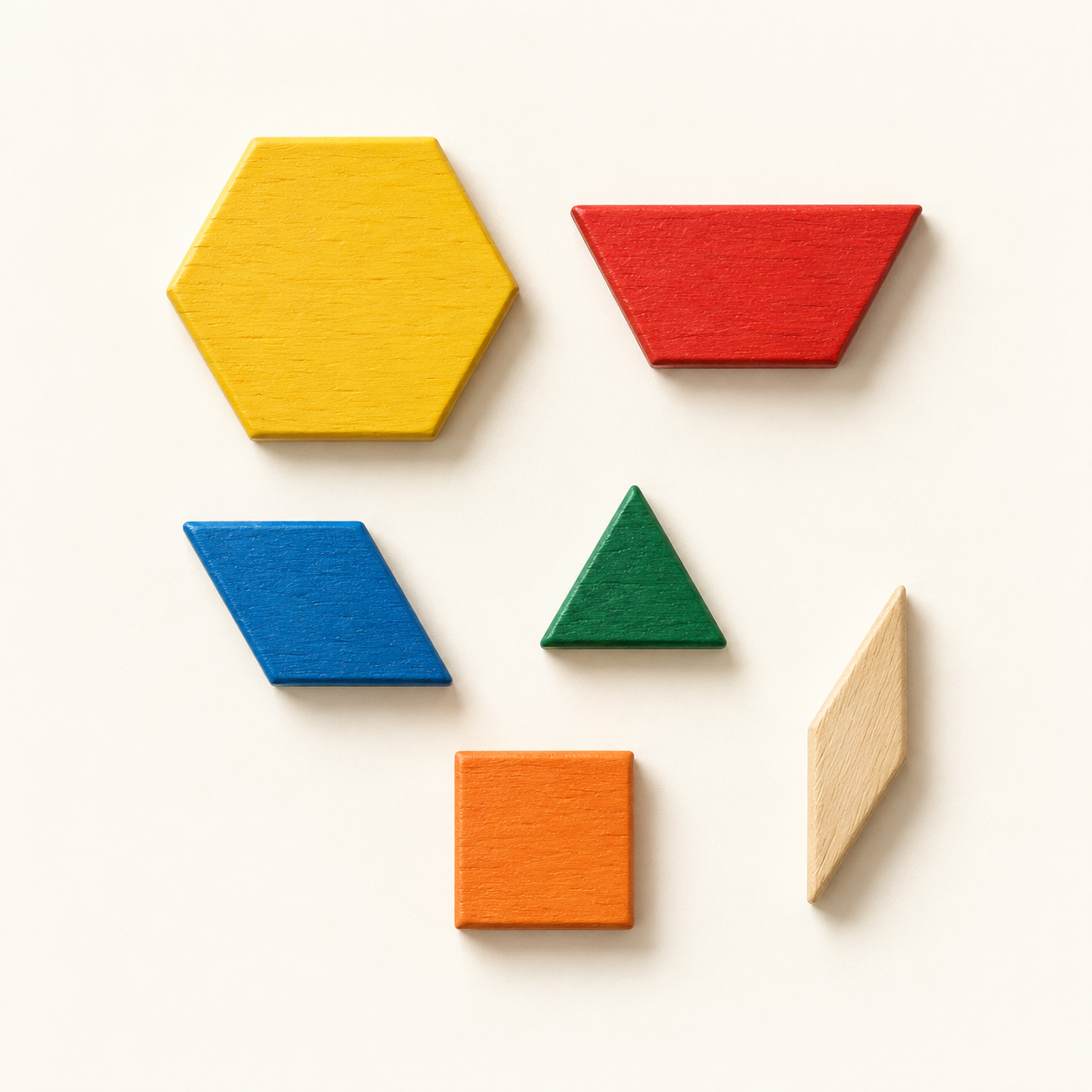
Geometric pieces for building shapes, exploring symmetry, and comparing parts of a whole.
Tangrams
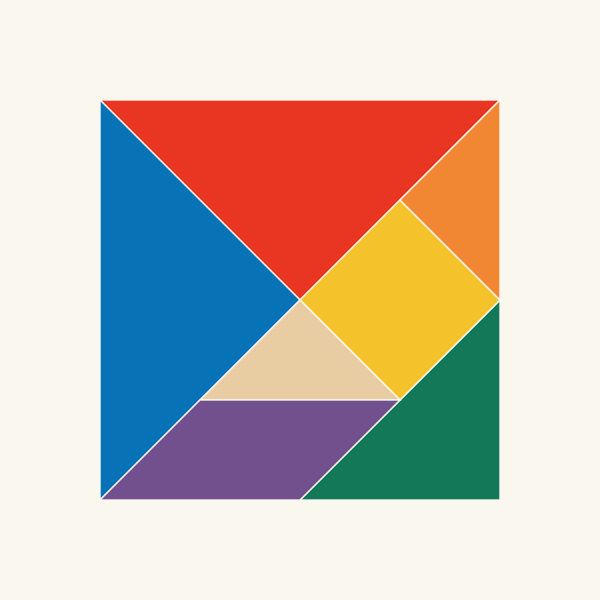
A seven-piece dissection puzzle for composing shapes, comparing area, and reasoning about position.
 Explore
Geoboards
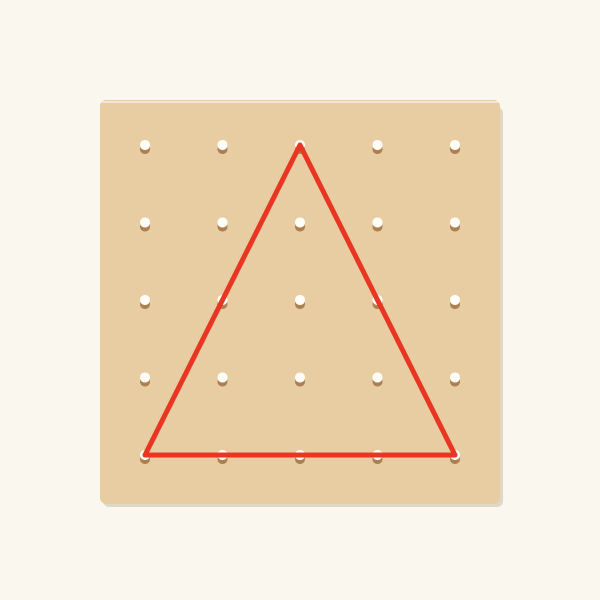
Peg boards and bands for making polygons and exploring their sides, area, and perimeter.
 Explore