Cuisenaire
Rods
Colored rods with lengths in a one-to-ten relationship for comparing numbers, operations, and fractions.

What
they teach.
Simple materials.
Powerful mathematical ideas.
Length relationships
Compare rods from a common starting point to see longer, shorter, and equal lengths.
Number combinations
Build different rod trains with the same total length.
Relative units
Choose a rod as one whole and describe other lengths in relation to it.
How to use them.
Start with curiosity. Make room for discovery.
Line up the ends
Put two rods against the same straight edge. Compare their lengths without gaps.
Make equal trains
Choose a target rod and build a matching train from shorter rods placed end to end.
Change the unit
Name the white rod as one unit, then try naming another rod as one whole. Discuss what changes.
Try an activity
Find the trains
Choose an orange rod as the target. Find trains of exactly two rods that match it. Record lengths, then decide whether reversing a train makes a new combination or a new arrangement.
Color is a clue, length is the mathematics
A rod can represent a number only after you establish a unit. With the shortest rod as one, the longest standard rod is ten. If a different rod becomes the whole, the same pieces can describe fractional relationships instead.
Keep the left ends aligned when comparing lengths. An offset arrangement can make two equal trains appear different. Invite learners to slide one train alongside another to check, rather than relying on the color names alone.
Try asking for all the ways to match one rod using identical shorter rods. Some lengths divide it exactly; others leave a gap. This is a useful starting point for a conversation about factors without requiring the vocabulary first. NRICH’s Cuisenaire collection offers further length and fraction investigations.
Choose your toolkit.
Find a format that fits your setting.
Check that all ten lengths are represented and that the set contains repeated short rods. Smooth edges and consistent dimensions matter more than a large advertised piece count.
Physical options link to Amazon. Illustrations show the material, not the exact product.
Physical option · plastic
hand2mind Cuisenaire Rods Early Math Activity Set
Includes 74 plastic rods in ten colors and lengths, plus 15 double-sided wipe-clean cards with 30 activities, a dry-erase marker, and a Getting Started Guide. Useful if you want prompts to work through alongside the rods.
View on AmazonPhysical option · wood
hand2mind Wood Cuisenaire Rods Individual Set (74 pieces)
Ten proportional rod lengths let learners compare quantities and compose equal lengths. This individual set contains 74 wooden rods.
View on Amazon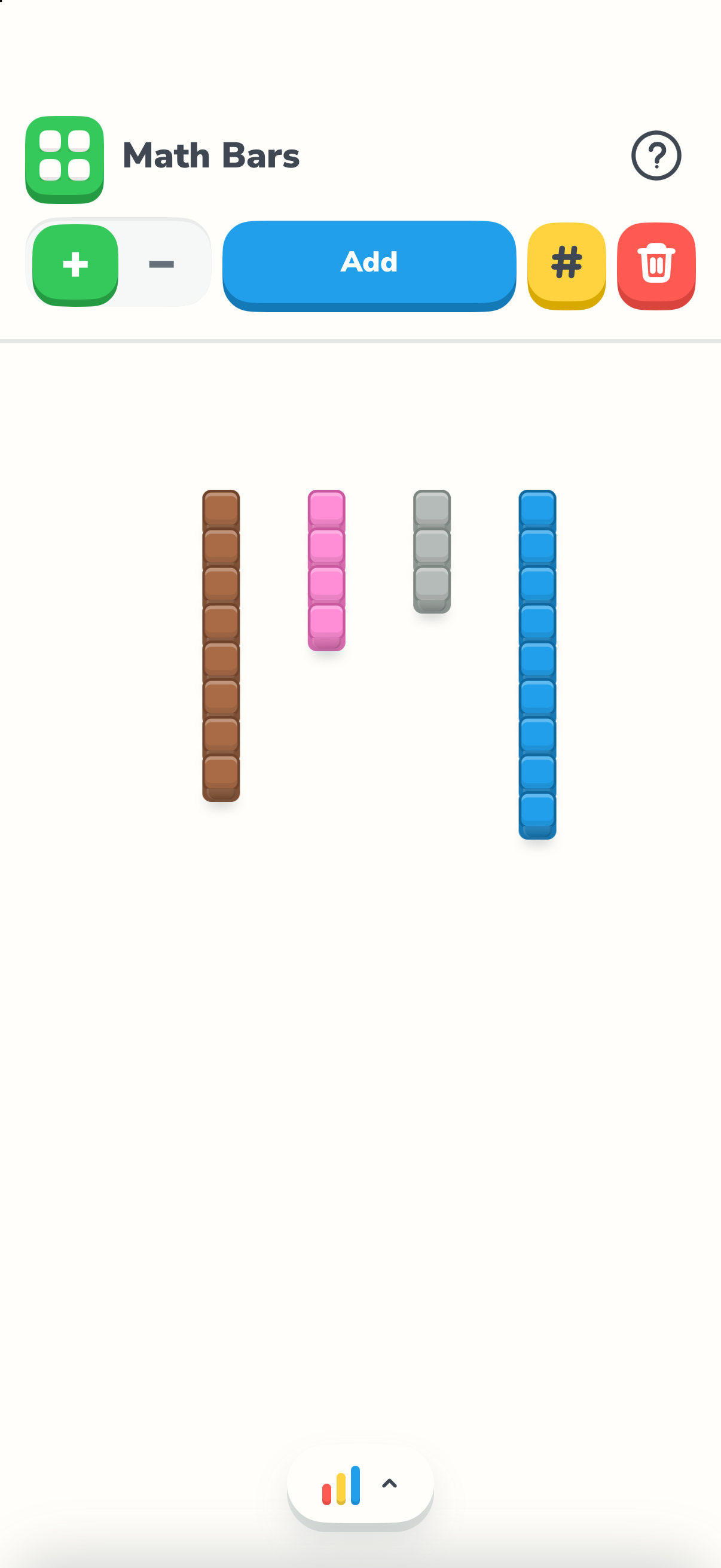
Digital alternative
Manipulatives app
Math Bars in the app
Math Bars, shown here, is a related length model. Compare bar lengths and combinations while keeping the unit clear. A standard Cuisenaire set has its own colors and proportions.
Explore the appSee our editorial and buying policy. Reviewed .
Sources and further reading
- NRICH: Cuisenaire Rods — Rod trains and relative-length fraction investigations.
Related tools.
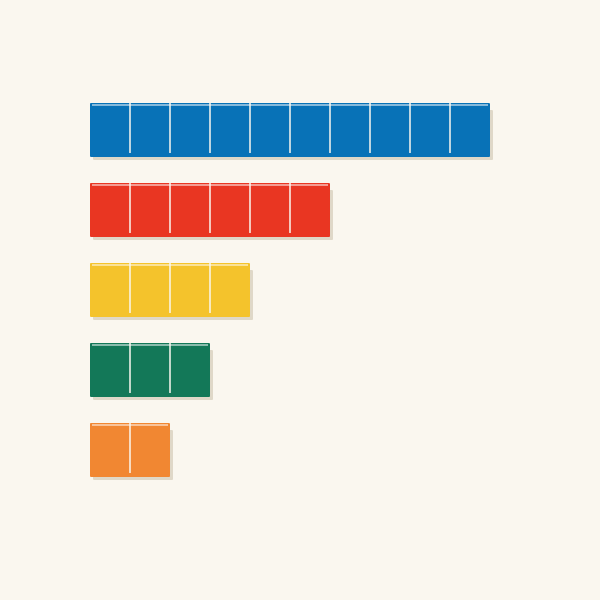
Explore the library →Math Bars
Length-based bars for showing quantities, comparing parts, and drawing attention to numerical relationships.
 Explore
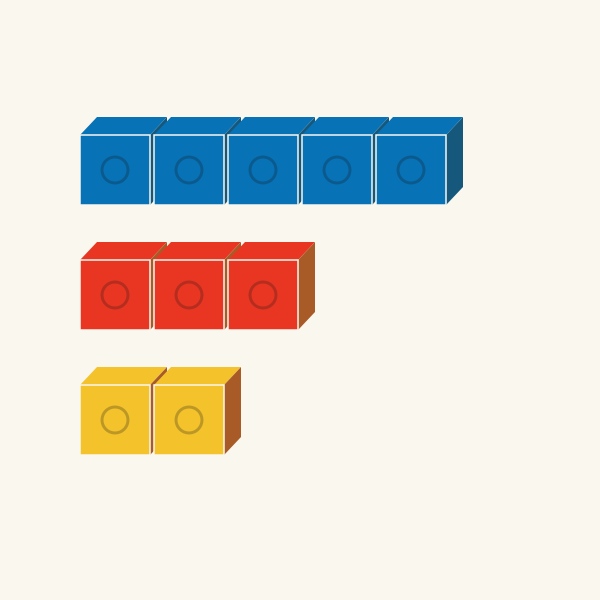
Linking Cubes
Equal-sized cubes that connect into trains, groups, arrays, and three-dimensional builds.
 Explore
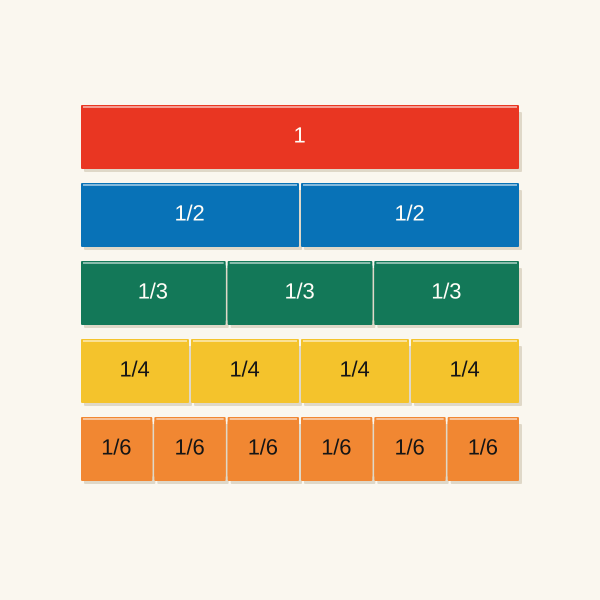
Fraction Tiles
Equal-length wholes partitioned into fraction strips for comparing, composing, and ordering fractions.
 Explore