Patterns & Algebra.
Describe repetition, notice change, and represent relationships with unknown values.
A pattern becomes a mathematical investigation when learners explain a rule and use it to make a prediction. Copying colors can be a starting point; the next question is what repeats or changes.
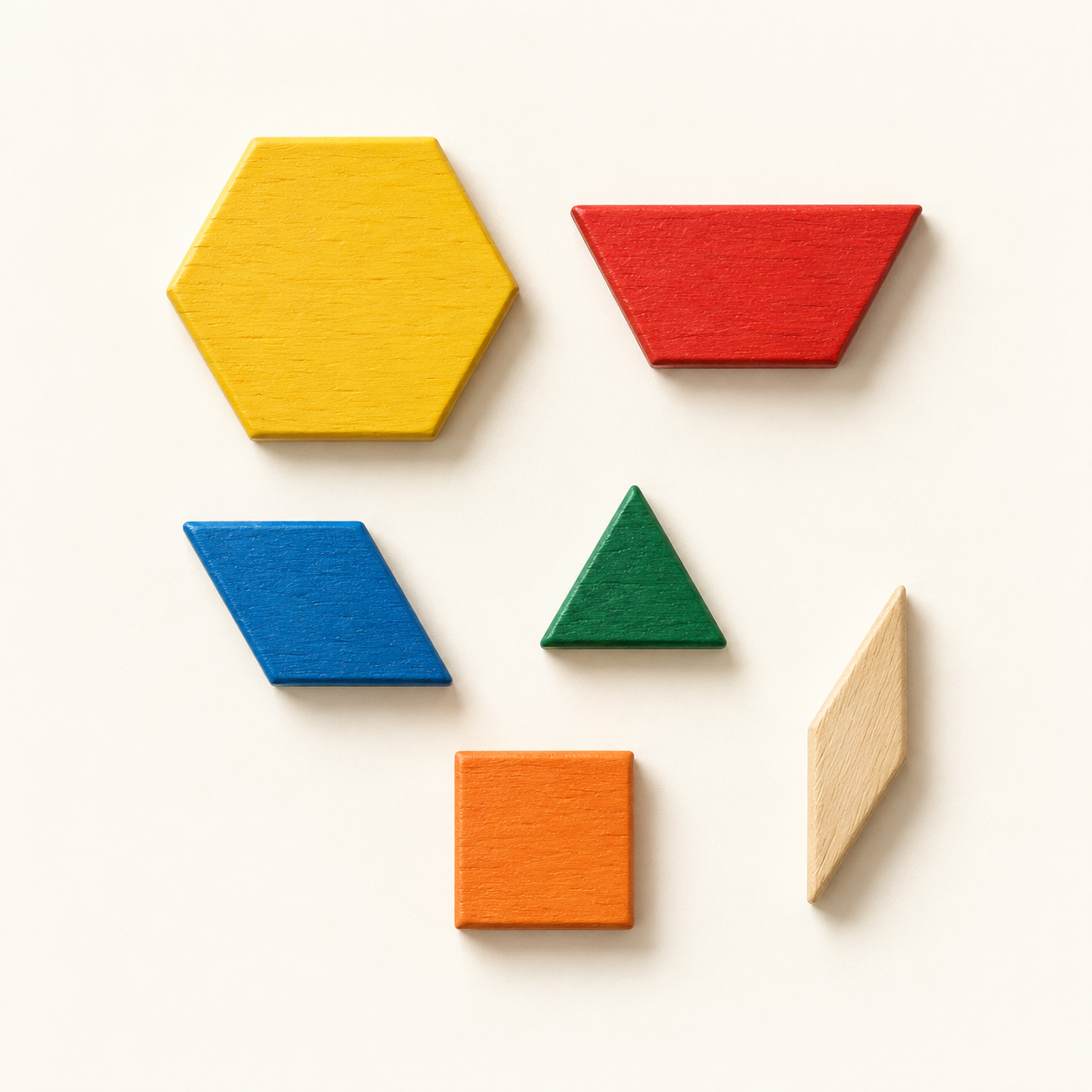
With pattern blocks, identify the smallest repeating unit and extend it. With linking cubes, build a growing sequence and compare successive stages. Use math bars to show a missing part in a numerical relationship.
A short list can fit more than one rule. Ask learners to state their rule clearly and show that it matches every given stage. Two different consistent rules can lead to different next stages, giving the group something worth discussing.
Make it concrete.

Ideas to explore.
Start with the tool guides above for practical activities.