Probability & Data.
Predict possible outcomes, collect observations, and compare a model with an experiment.
Chance tasks benefit from a clear distinction between what could happen, what a mathematical model predicts, and what actually happened in a trial. None of those lists automatically replaces the others.
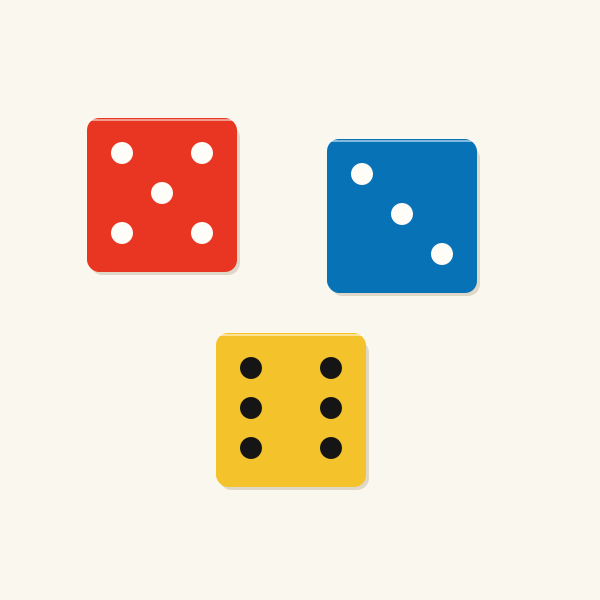
Dice and spinners provide manageable experiments. Agree on a procedure, record every outcome, and choose the number of trials before comparing results. A tally chart is often enough to begin.
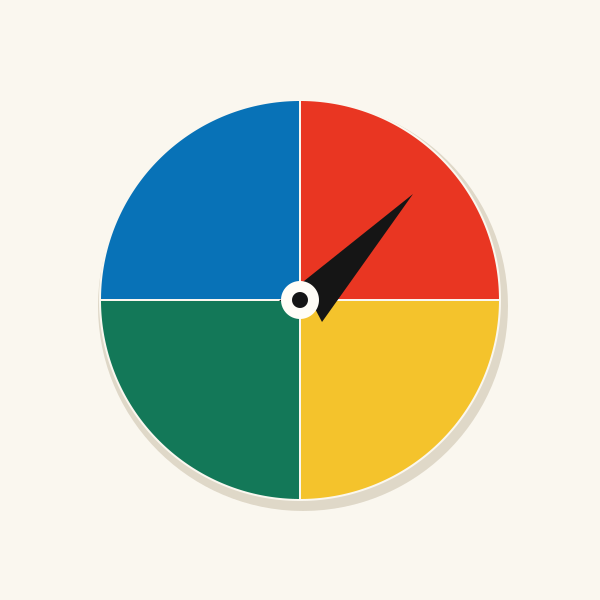
Discuss the assumptions behind a prediction. Equal sectors on an ideal fair spinner have equal probabilities; a physical pointer may behave less ideally. A short sequence that differs from a prediction is a prompt for investigation, not proof that the next result must compensate.
Make it concrete.
Ideas to explore.
Start with the tool guides above for practical activities.